Potraviny · Etiópia · Coffee Resurrect, Inc.
Coffee Resurrect: Etiópia mení odpad z kavy na cenné suroviny
Etiópsky startup Coffee Resurrect zbiera použitú kávovú gušu a strupe z kavární, reštaurácií a letísk, potom ju spracováva na olej, vlákna a múku, ktoré predáva ako B2B suroviny v kosmetike, potravinárskom a farmaceutickom priemysle.
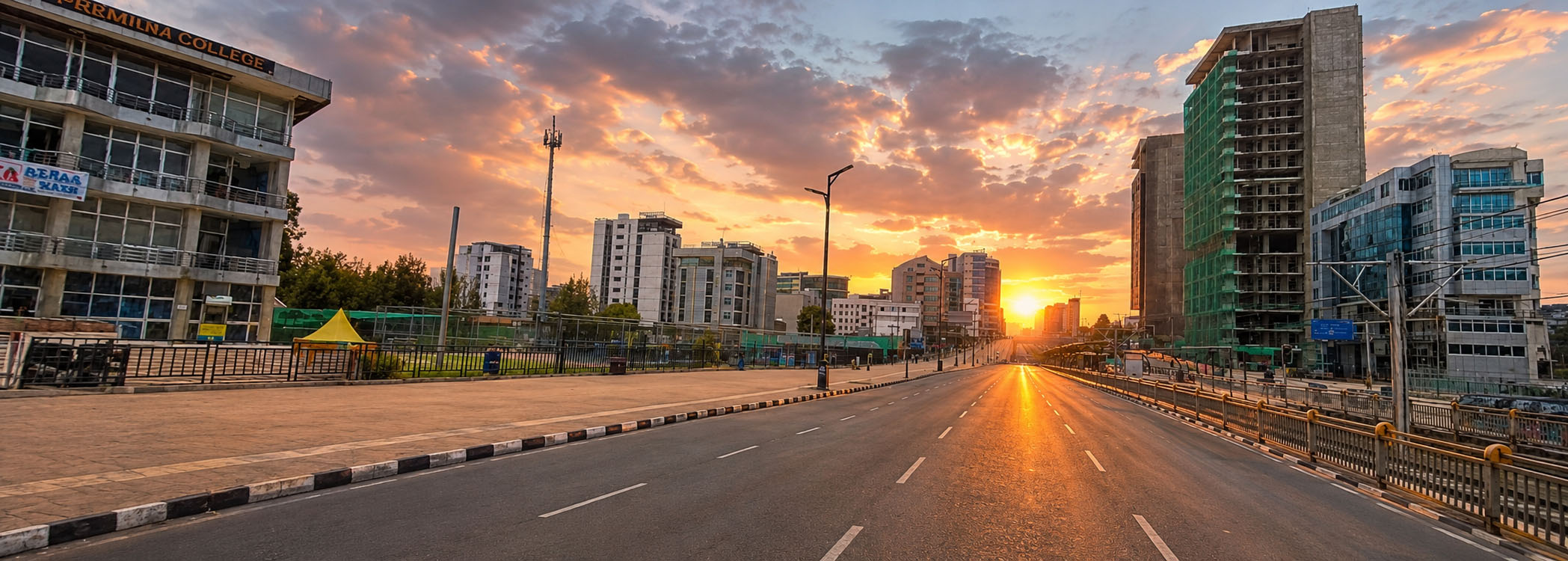
Na ceste do centrály v Addis Abebe.
Almaw Molla pozoroval roky, ako sa kávová guša hromadí na skládkach v Addis Abebe, meste posadnutom kávou v krajine, ktorá je jej rodištanisko a zároveň najväčším producentom v Afrike. V roku 2020 si položil inú otázku ako väčšina ľudí: namiesto 'ako túto recyklujeme?' sa spýtal 'ako ju rozložíme na cenné zložky?'. Spolu s kolegom Seblegenetom Akliluom, ktorý priniesol chemické pozadie, vybudoval Coffee Resurrect na takmer bezplatnej surovine — použitej kávovej gušu a strupoch, ktoré si inak podniky museli platiť na likvidáciu. Pomocou extrakcií s nadkritickým CO₂ spoločnosť spracovává odpad na tri hlavné ingrediencie: CROIL na kozmetiku, CRFIBER na osobnú starostlivosť a CRFLOUR na pečivo a zdravotné potraviny. Startup už zdolal cestu od konkrétnych inovácií k prestížnym oceneniam a naznačuje, že čistý biznis model sa dá vytvoriť z umeleckého zdôvodnenia.
Kľúčové fakty
- Založená v roku 2020 v Addis Abebe, Etiópii, Almawom Mollom a Seblegenetom Akliluom.
- Zbiera použitú kávovú gušu a strupce z kavární, reštaurácií, kantín a letísk.
- Vyrába tri hlavné B2B ingrediencie: CROIL (kávový olej), CRFIBER (kávové vlákno) a CRFLOUR (kávová múka).
- Cieľový trh sú kozmecké, osobnej starostlivosti, farmaceutické, slnečná starostlivosť a potravinársko-nutraceutické odvetvia ako B2B zákazníci.
- Používa nadkritickú CO₂ extrakciu a pozicionuje sa ako 'kávová biorafinéria' namiesto recyklácie.
- Podpísala dohodu o zbere surovín s juhoafrickou restaračnou skupinou s 300 pobočkami na centralizáciu dodávok.
- Popisuje model 70/30 v potravinárskom segmente, kde približne 70 % výstupu je komercializovaných a 30 % sa presmerúva farmárom, lokálnym trhom a komunitným programom (neoverené tvrdenie spoločnosti).
- Vyhrala druhé miesto na Sustainable Beauty Awards (2022), Global Startup Awards Best GreenTech Africa (2023) a Global Finalist (2024), a bola vybraná ako Hello Tomorrow Deep Tech Pioneer spomedzi 4 800 kandidátov zo 108 krajín (2026).
- Prezentovaná CNN Inside Africa vedľa ďalšieho etiópskych environmentálnych projektov.
- Podľa Carty spoločnosť pracuje na semenom kole financovania bez verejne potvrdenej sumy, pričom plánuje expanziu do Kene a Juhoafrickej republiky.
Hĺbková analýza
Iba v angličtineCoffee Resurrect is an Ethiopian company that takes used coffee grounds and coffee 'silver skin' — things normally thrown in the trash — and turns them into valuable raw materials. Founder Almaw Molla noticed for years that coffee waste simply ended up in landfills, even though Ethiopia is the birthplace of coffee and Africa's biggest coffee producer. Instead of making novelty souvenirs from coffee grounds, the company built what it calls a 'coffee biorefinery': it collects used grounds for free or cheap from cafes, restaurants, canteens and airports, then processes them using extraction technology (including supercritical CO2) into three main ingredients — an oil (CROIL) for cosmetics and skincare, a fiber (CRFIBER) also for personal care, and a flour (CRFLOUR) for baked goods and sports nutrition. These are sold business-to-business to cosmetic, food and pharma companies, not directly to end consumers. The core insight: cheap, abundant waste can be split into several higher-value ingredients instead of being reused as one low-value product. The company has real products, a cosmetics-industry award (2022 Sustainable Beauty Awards runner-up), multiple startup competition wins, CNN coverage, and as of 2026 was still active enough to be named a Hello Tomorrow Deep Tech Pioneer out of thousands of applicants. It is working with Carta on preparing a seed funding round, and has discussed a collection agreement with a South African restaurant chain of 300 locations, plus plans to expand to Kenya and South Africa. No public funding amount is confirmed. The business model is not simple recycling — it sits between waste management and specialty biotech/chemistry, which is what makes it more scalable and defensible than a typical 'trash to product' story. The biggest operational challenge is logistics: coffee grounds are wet, heavy, perishable and spread across many small locations, so the model depends on partnering with large groups (chains, hotel groups) rather than collecting from individual households. This is a genuine, multi-year proof of concept that a real deep-tech company can be built from an overlooked waste stream — though it remains an early-stage business still seeking scale-up capital, and several impact numbers circulating online about coffee waste's environmental cost are unverified by us.
Príbeh zakladateľa
The idea grew out of Almaw Molla's long-term observation that coffee grounds were simply being thrown away and ended up in landfills, combined with his personal connection to the coffee industry through his family's coffee export business.
Trigger: The specific idea to valorize coffee beyond the drink itself took shape in 2020, according to the company's own account.
Problém
6/10
Large volumes of coffee waste — spent coffee grounds, silver skin, pulp and husks — are generated by cafes, restaurants, canteens, airports and coffee processing, and are normally discarded rather than reused, even though they still contain valuable compounds (oils, fibers, antioxidants, minerals).
Riešenie
7/10
Coffee Resurrect collects spent coffee grounds and silver skin from cafes, restaurants, canteens and airports, then processes this waste using drying and extraction technology (including supercritical CO2) to break it down into distinct higher-value ingredients: CROIL (a coffee oil containing linoleic acid, palmitic acid, polyphenols, tocopherols and diterpene esters), CRFIBER (a coffee fiber), and CRFLOUR (a coffee-based flour/fiber with antioxidant and mineral content). These are sold as B2B ingredients to cosmetics, personal care, pharma, and food/nutraceutical companies, rather than as finished consumer products.
Ochota zákazníkov platiť
6/10
These industries value sustainable, differentiated ingredients (evidenced by CROIL and CRFIBER winning runner-up at the Sustainable Beauty Awards 2022 for 'Sustainable Ingredient'), and the ingredients offer specific functional properties (oils with polyphenols/tocopherols for skincare/anti-aging, fibers for personal care, flour with antioxidants/minerals for food and sports nutrition) that can differentiate their end products. (Recurring (B2B ingredient supply contracts, e.g., the described collection/sourcing agreement with a 300-location South African restaurant group))
Konkurencia
3/10
Entry appears moderately to highly difficult for a serious competitor, based on the source: it requires (1) reliable, concentrated access to spent coffee grounds via partnerships with cafés, restaurants, hotels, airports or large chains (the source cites a deal with a 300-location South African restaurant group as a key enabler), (2) logistics for a wet, heavy, perishable, spatially dispersed raw material, (3) extraction technology such as supercritical CO2, and (4) certification/quality control to sell into regulated cosmetics, pharma and food markets. These combined operational and technical barriers make simple imitation harder than it looks, even though the raw material itself is cheap.
Veľkosť trhu
5/10
The source provides strong qualitative signals of market size (abundant raw material, multiple industries as buyers, international awards, and interest from Deep Tech Pioneer programs) but no quantified market-size, revenue, or TAM figures. My score below is an educated estimate based on the breadth of target industries (cosmetics, food, pharma, personal care) and confirmed raw-material abundance, not on disclosed financial data.
Obchodný model
Manufacturing/one-time B2B ingredient sales: CROIL (coffee oil), CRFIBER (coffee fiber) and CRFLOUR (coffee flour) sold to cosmetics, personal care, pharma, and food manufacturers, Not evident in the source material: licensing of extraction technology, Not evident in the source material: marketplace model, Not evident in the source material: subscription model, Not evident in the source material: advertising revenue, Not evident in the source material: consulting revenue, Not evident in the source material: franchise model, Not evident in the source material: commission-based revenue -- Not evident in the source material. No profit margin, pricing, or unit-economics figures are disclosed. The source only notes conceptually that the raw material (spent coffee grounds) can be obtained very cheaply or for free, while downstream costs (collection, transport, drying, storage, sorting, extraction, energy, machinery, quality control, lab work, certification, packaging, distribution) add up afterward.
Ochrana proti kopírovaniu (Moat)
5/10
No patents are mentioned in the source material, and the underlying idea (turning spent coffee grounds into oil, fiber, and flour) is conceptually simple enough that others could attempt it. However, the moat is not zero: building reliable, low-cost collection relationships with hundreds of gastronomy locations, mastering extraction processing, and earning credibility through international awards all take real time and are hard to copy quickly and cheaply. This gives Coffee Resurrect a moderate, execution-based moat rather than a strong legal or technological barrier.
Skrytý čas vývoja
1-3 years -- Coffee Resurrect isn't a pure software play that can be coded in a garage overnight. It requires building a physical collection logistics network with cafés/restaurants, drying and extraction infrastructure (including supercritical CO2 technology), lab-grade quality control, and certification work before any credible B2B ingredient can be sold. The source material shows the company itself moved from an initial idea (2020) to small-scale production and R&D over roughly 1-2 years before entering award competitions in 2021-2022, and is still described as an early deep-tech company years later. Large competitors (agri-waste biotech firms, big cosmetic ingredient suppliers) would likely notice once award recognition or media coverage (like the 2022 Sustainable Beauty Award or CNN feature) starts, so meaningful stealth time is limited to roughly the first 1-3 years of quiet R&D and pilot collection deals.
Potrebné zručnosti zakladateľa
Čas do prvého príjmu
1-2 years
Čas do ziskovosti
Not evident in the source material.
Dá sa to spustiť na čiastočný úväzok?
Budúci výhľad
Coffee Resurrect sits at the intersection of two durable megatrends: circular economy / waste valorization and sustainable ingredient sourcing for cosmetics, food and nutraceuticals. The source material shows continuous multi-year traction (founded 2021, still active and recognized in 2026 as a Hello Tomorrow Deep Tech Pioneer), repeated industry awards, and a supply of raw material (spent coffee grounds, silver skin) that will exist as long as coffee is consumed. The main technology risk is that the core process relies on capital-intensive extraction technology (supercritical CO2) and on building reliable, low-cost logistics for a perishable, spatially dispersed waste stream — this is an execution risk more than a market-demand risk.
Riziko AI
The physical core of the business — collecting spent coffee grounds from cafés/restaurants, drying, transporting and extracting oil, fiber and flour via biotechnological/CO2 extraction — cannot be replaced by AI, since it depends on physical logistics, chemistry and hardware. The company could adopt AI-driven route optimization for waste collection (reducing the logistics cost highlighted as a major challenge in the source), use machine-learning-assisted R&D to identify additional high-value compounds in coffee byproducts, and apply automated quality-control/lab-analysis tools to speed up certification and scale-up for new B2B clients.
Podobné firmy vo svete
Biobean · United Kingdom
Demonstrates that spent-coffee-grounds collection logistics from many small venues is a recurring operational challenge across companies pursuing this business model, reinforcing the logistics risk noted for Coffee Resurrect.
Kaffeeform · Germany
Shows an alternative commercial path (finished consumer products) for coffee waste, versus Coffee Resurrect's chosen path of supplying refined ingredients to other industries — illustrating that multiple viable business models exist around the same raw material.
Nápady na zlepšenie
- New products: Develop additional extracted compounds beyond oil, fiber, and flour (e.g., further polyphenol or antioxidant isolates) to diversify B2B ingredient offerings.
- Automation: Use route-optimization or logistics software to make collection from dispersed cafés, restaurants, and airports more cost-efficient, addressing the explicitly named logistics challenge.
- Internationalization: Prioritize replicating the large-partner collection model (like the 300-location South African restaurant group deal) when entering new markets such as Kenya, to secure concentrated, reliable raw-material streams quickly.
- Pricing: Formalize tiered B2B pricing for cosmetic vs. food vs. nutraceutical customers based on ingredient purity/grade, to capture more value from higher-margin segments.
- Technology: Continue investing in extraction technology (e.g., supercritical CO2) efficiency to lower per-unit processing costs as volume scales.
SWOT analýza
Silné stránky
- - Has real, named products (CROIL, CRFIBER, CRFLOUR) rather than a concept — this is a working, multi-year proof of concept.
- - B2B model selling into cosmetics, pharma and food companies means higher margins than simple recycling or novelty souvenirs.
- - External validation: 2022 Sustainable Beauty Awards runner-up, multiple startup competition wins, CNN coverage, and Hello Tomorrow Deep Tech Pioneer selection out of thousands of applicants.
- - Uses a 'biorefinery' approach that splits one cheap waste stream into three distinct higher-value ingredients, increasing revenue potential per unit of raw material.
- - Raw material (spent coffee grounds and silver skin) is sourced for free or very cheaply, keeping input costs low.
- - Founder has direct, long-observed insight into the problem, based in Ethiopia — the birthplace of coffee and Africa's largest producer, giving proximity to abundant raw material.
- - Positioned between waste management and specialty biotech/chemistry, which the source argues makes it harder to copy than a typical trash-to-product business.
Slabé stránky
- - Still an early-stage business seeking scale-up capital; no confirmed public funding amount as of the source material.
- - Core operational challenge is logistics — coffee grounds are wet, heavy, perishable and spread across many small locations, which complicates collection.
- - Business model depends on securing large-group partnerships (chains, hotel groups, airports) rather than being able to scale via individual households or cafes directly.
- - Some impact numbers about coffee waste's environmental cost circulating online are explicitly flagged as unverified by the source.
- - No information in the source about team size, technical staff, or organizational depth beyond the founder.
- - Not evident in the source material: unit economics, margins, production capacity, or revenue figures.
Príležitosti
- - Discussed collection agreement with a 300-location South African restaurant chain, which could be a major scale enabler if finalized.
- - Planned expansion into Kenya and South Africa, both large coffee-producing or coffee-consuming markets.
- - Working with Carta to prepare a seed funding round, suggesting a path toward institutional capital.
- - Rising global demand for sustainable, upcycled and 'clean' ingredients in cosmetics, personal care, and food/nutraceutical industries.
- - Recognition from programs like Hello Tomorrow could open doors to deep-tech investors, corporate partnerships, and grants.
- - Ethiopia's position as Africa's biggest coffee producer offers a large, geographically concentrated raw material base for growth.
Hrozby
- - A well-capitalized competitor could replicate the extraction technology and chain partnerships once the model is proven, since the raw material itself is not proprietary.
- - Selling into regulated cosmetics, pharma and food markets requires certification and quality control, which could slow growth or expose the company to compliance risk.
- - Logistics costs for handling wet, heavy, perishable material at scale could erode the cost advantage of 'free' raw material.
- - Heavy reliance on large partner organizations (chains, hotel groups) means losing a key partnership could significantly disrupt supply.
- - Circulating but unverified environmental claims about coffee waste could create reputational or credibility risk if scrutinized.
- - As an early-stage company without confirmed funding, execution risk remains high; failure to close the seed round could stall expansion plans.
Konečné hodnotenie AI
Obchodný potenciál
7/10
The company has moved beyond an idea into real products sold B2B, with industry recognition and a genuine multi-year track record. The three-ingredient biorefinery model gives it more than one revenue stream from a single waste input, which is a stronger business logic than typical 'upcycled novelty' waste startups. It is not yet proven at large scale, which keeps this from scoring higher.
Atraktivita pre investorov
6/10
Awards, CNN coverage, competition wins and selection as a Hello Tomorrow Deep Tech Pioneer are strong signals that outside evaluators see promise. It is actively preparing a seed round with Carta. However, no funding amount is confirmed, and deep-tech/biorefinery ventures typically require significant capital and time before returns, which tempers attractiveness for investors seeking faster or lower-risk exits.
Vhodnosť pre začiatočníkov
3/10
This is not a beginner-friendly business to replicate. It requires access to extraction technology (including supercritical CO2), relationships with large institutional partners for reliable waste supply, logistics management for perishable material, and the ability to meet certification standards for cosmetics, pharma and food industries. A newcomer without technical or industry expertise would face steep barriers.
Inovácia
8/10
Rather than making a single low-value product from coffee waste (a common approach), the company applies a biorefinery model to extract multiple distinct, higher-value ingredients (oil, fiber, flour) for different industries. Combined with supercritical CO2 extraction technology, this is a genuinely more sophisticated and innovative approach than typical 'coffee ground recycling' concepts.
Škálovateľnosť
6/10
The B2B ingredient model and plans to expand into Kenya and South Africa suggest real scalability potential, especially since large chain partnerships (like the 300-location restaurant deal) can supply concentrated volumes of raw material. However, the logistics constraints around wet, heavy, perishable material spread across many small sites limit how fast and cheaply the model can grow, keeping this at a moderate rather than high score.
Dlhodobá príležitosť
7/10
Coffee waste is a large and continuously renewing resource, especially in a major coffee-producing country like Ethiopia, and demand for sustainable ingredients in cosmetics and food is a durable trend. The company's expansion plans and industry recognition suggest a credible long-term trajectory, though it still needs to prove it can scale operations and secure sustained funding.
Riziko
6/10
As an early-stage company still seeking scale-up capital, with unresolved logistics challenges and dependence on finalizing large partnership deals, there is meaningful execution risk. This is moderate-to-elevated risk typical of a promising but unproven deep-tech venture, not extreme risk given its multi-year track record and external validation.
Konkurenčný tlak
4/10
The source argues that entry is moderately to highly difficult due to the combination of sourcing logistics, extraction technology, and certification requirements — this keeps competitive pressure lower than a typical simple business. However, because the raw material itself is cheap and abundant, well-funded competitors could eventually enter if the model proves lucrative.
Dopyt zákazníkov
6/10
The company has secured enough interest to win awards, competitions, and media coverage, and is in discussions for large-scale collection deals, suggesting real market interest from both raw-material partners and potential B2B ingredient buyers. However, the source does not provide confirmed sales figures, contracts, or customer names in the cosmetics/food/pharma buyer segment, so actual purchasing demand is not fully evidenced.
Bariéra vstupu
7/10
Multiple combined barriers make this hard to copy casually: reliable access to concentrated coffee waste via large partnerships, logistics for a difficult raw material, specialized extraction technology like supercritical CO2, and certification for regulated industries. This is a higher barrier to entry than most consumer-facing recycling or novelty businesses.
Celkové hodnotenie
7/10
Coffee Resurrect represents a credible, multi-year deep-tech proof of concept turning an overlooked waste stream into several higher-value B2B ingredients. Its innovation, external validation, and expansion plans are genuine strengths, but it remains an early-stage company facing real logistics challenges and has not yet confirmed scale-up funding, so it is a promising but still unproven long-term bet.
Prečo na tom záleží
Coffee Resurrect demonštruje, ako premena 'problému s odpadom' na nevyužitý prúd surovín — a predaj spracovaných B2B ingrediencií namiesto hotových spotrebiteľských produktov — môže zmeniť nemultimílionový vedľajší produkt na škálovateľný, vyvoziteľný biotechnologický biznis. Prípad ukazuje, že inovatívna chémia v kombinácii s praktickým riešením dodávateľského reťazca môže vytvoriť skutočnú ekonomickú hodnotu z mestských odpadov.