Stories · Brazil · Grão Direto
Digital Agricultural Marketplaces in Brazil: How Farmers, Buyers, Suppliers and FinTech Are Transforming Agribusiness
In a country with 5 million fragmented farms and record grain harvests, Grão Direto built a digital marketplace that connects farmers to buyers like Cargill and ADM — and grew it into a data, financing and barter engine by making the platform free for farmers and charging the corporations instead.
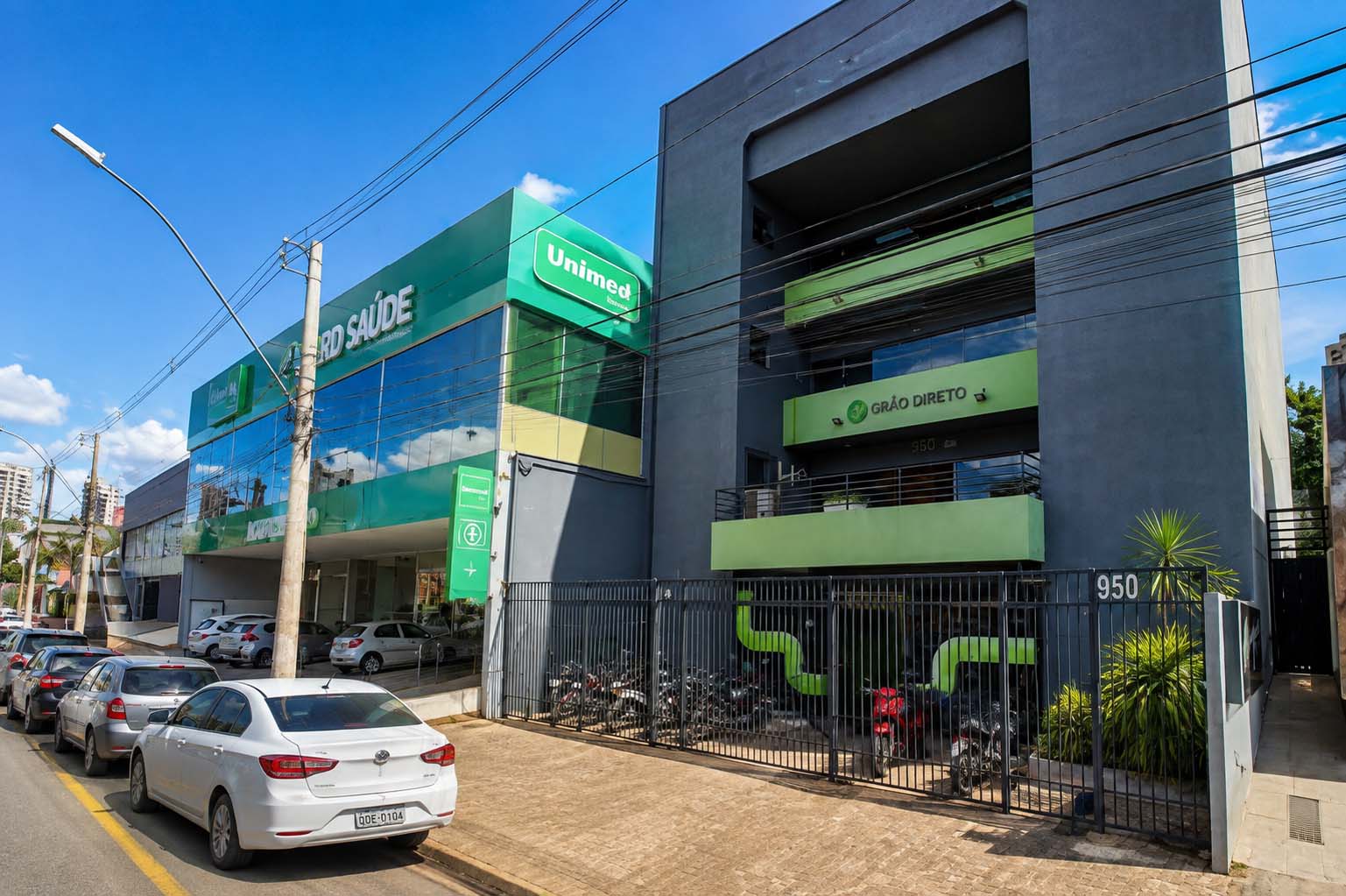
Headquartered in Uberaba, a city of around 340,000 inhabitants in the heart of Brazil.
Brazil's agricultural supply chain runs through layers of local traders, cooperatives and trading companies, each one adding margin, hiding prices, and slowing deals down. Grão Direto didn't try to eliminate those middlemen — it digitized the transactions between them. Starting with a deliberately narrow liquidity wedge (soy, corn and sorghum, some of the most liquid commodities on earth), the platform grew from 1 million tons of grain connected in 2021 to roughly 8 million tons in 2024, with a 2025 target of 12 million. By early 2024 it had over 300,000 app downloads, 7,000 pickup and delivery points, and was crunching more than 20 million prices a day; by 2025 that had scaled to over 47 million daily price calculations, 100,000+ users and 12 million negotiations. The real twist is the business model: farmers pay nothing to sell, because they are the harder side of the marketplace to win — instead, buyers like ADM, Cargill, Bayer, BASF, Amaggi and Louis Dreyfus Company pay for access, and digital contract services get monetized separately. From there Grão Direto expanded into 'Barter Fácil,' letting farmers pay for seeds and fertilizer with a future harvest instead of cash, used by partners like Amaggi and Petrovina Sementes. It's now also selling market intelligence (Grainsights) to cooperatives and traders, and building an AI assistant called AIrton that talks to producers over WhatsApp about prices, contracts and trade timing. In 2025 the company raised R$90 million led by Kaszek, with Bradesco, CME Ventures and SLC Ventures joining — proof that investors are betting not on an 'agri-app' but on a full digital infrastructure layer for agricultural commerce, alongside comparable Brazilian plays like Banco do Brasil's Broto (R$9.3B GMV, 320,000 producers) and the fintech Traive, which is tackling the roughly R$1 trillion in annual financing Brazilian farmers need.
Key facts
- Grão Direto focuses on trading soy, corn and sorghum, connecting producers directly with buyers and trading companies.
- It calls itself the largest digital grain trading platform in Latin America, with 300,000+ downloads and 7,000+ pickup/delivery points as of early 2024.
- By 2025 it reported 100,000+ users, 12 million negotiations and over 47 million prices calculated per day.
- Grain volume connected through the platform grew from about 1 million tons in 2021 to roughly 8 million tons in 2024, targeting 12 million tons in 2025.
- The platform charges no sales fee to farmers; buyers/companies pay instead, plus revenue from monetized digital contract services.
- Its Barter Fácil product lets farmers pay for inputs like seed and fertilizer with a future harvest, used by partners such as Amaggi and Petrovina Sementes.
- It sells a market intelligence product called Grainsights to cooperatives, traders, warehouses and logistics firms.
- It developed an AI assistant, AIrton, that interacts with producers over WhatsApp to support market analysis and sales decisions.
- In 2025 it raised R$90 million in funding led by Kaszek, with Bradesco, CME Ventures, SLC Ventures and Endeavor Scale-Up Ventures participating.
- Public customers/partners include ADM, Amaggi, BASF, Bayer, Cargill, Bradesco and Louis Dreyfus Company.
- Comparable Brazilian models include Broto (built by Banco do Br
Deep analysis
This report analyzes a digital marketplace model for agriculture, using Brazil's Grão Direto as the core case study. Brazilian agriculture is huge and fragmented: about 5 million farms, record grain harvests (358.6 million tons in 2025/26), and a supply chain full of middlemen (local traders, cooperatives, trading companies) who each add cost, hide prices, and slow deals down. Rather than trying to cut out these middlemen, Grão Direto digitized the transactions between them, starting narrowly with soy, corn and sorghum. It grew from 1 million tons of grain connected in 2021 to about 8 million tons in 2024, aiming for 12 million in 2025, with over 100,000 users and 12 million negotiations by 2025. The clever part is the business model: farmers sell for free, because they are the harder side to attract, while buyers like ADM, Cargill, Bayer, BASF, Amaggi and Louis Dreyfus pay for access and digital contract tools. The platform then expanded into 'Barter Fácil,' letting farmers pay for seeds and fertilizer with future harvest instead of cash, plus a market-intelligence product (Grainsights) and an AI assistant (AIrton) that talks to farmers over WhatsApp about prices and contracts. In 2025 Grão Direto raised R$90 million led by Kaszek, with Bradesco and others joining, signaling that investors see this as building agricultural commerce infrastructure, not just an app. Comparable Brazilian models (Broto, backed by Banco do Brasil, and the fintech Traive) show the same pattern: marketplace, financing, data and AI layered together. The report's key lesson for a new venture like MarketGapHub is to avoid trying to be 'Amazon for farmers' across every product category, and instead pick one liquid niche (e.g., agricultural inputs or grain) as a starting wedge, keep farmer access free, and monetize the business side (suppliers, buyers, banks, insurers, logistics companies) through commissions, subscriptions, financial referrals and data products. The biggest risks are trust, liquidity (needing both buyers and sellers at once), physical logistics, product quality variation, credit risk, regulation, and competing against deeply trusted local traders who already bundle credit, advice, inputs and offtake in one relationship. To win, a marketplace must offer more than a marginally better price — ideally better financing, better prices, more choice, better information and faster transactions combined. Overall, the source material rates this as a strong long-term platform opportunity (9/10 as full agri-commerce infrastructure) though a much more modest one as a simple 'buy and sell online' marketplace (6/10).
Founder Story
The source describes the idea emerging from observing how fragmented and intermediary-heavy Brazil's agricultural supply chain is, and realizing that instead of eliminating middlemen (local traders, cooperatives, trading companies), a platform could digitize the transactions between them. Grão Direto is presented as the leading real-world example of this insight, starting with a narrow, highly liquid commodity set (soy, corn, sorghum) as a 'liquidity wedge' before expanding.
Trigger: Not evident in the source material.
The Problem
8/10
Agricultural trade in Brazil traditionally flows through multiple layers of intermediaries — local traders, cooperatives, trading companies, processors and exporters on the sell side, and manufacturers, distributors and local dealers on the buy side. Each additional intermediary can add margin, withhold information, reduce price transparency, slow down transactions, make financing more expensive, and complicate logistics.
The Solution
8/10
A digital marketplace and commerce infrastructure that connects farmers with suppliers, buyers, financial institutions and logistics providers — without necessarily eliminating existing intermediaries like local traders or cooperatives, but by moving their transactions onto a digital platform. Core functions include price comparison, request-for-quote style buying and selling of inputs and harvests, digital contract management, financing integration, barter arrangements (paying for inputs with future harvest), market data/intelligence products, and increasingly AI-driven decision support (e.g., Grão Direto's AIrton assistant communicating with farmers via WhatsApp about prices and contracts).
Customer Willingness To Pay
Buyers and business customers (large trading companies, manufacturers, cooperatives, banks, insurers, logistics firms) pay because the platform gives them efficient access to a highly fragmented farmer base, better market data, digital contract tools, financing referral opportunities, and leads. Farmers are onboarded for free because, per the source, they are the harder side of the marketplace to win, and free access to price comparison and better deals is a much easier pitch than charging them a commission on their harvest. (undefined)
Competition
7/10
High. The source identifies trust (farmers must trust the buyer), liquidity (needing both sufficient buyers and sellers simultaneously — the classic chicken-and-egg marketplace problem), logistics (physical, perishable, bulky goods), quality variability (not all soy/coffee/corn is equal), financing risk (credit defaults can be very costly), heavy regulation of agricultural and financial products, and long-standing farmer relationships with local dealers and cooperatives as the core barriers (sections #37–38). Established, well-funded players (Grão Direto, Broto, Traive) already occupy strong positions with bank backing, large GMV, and AI tooling.
Market Size
10/10
The source repeatedly emphasizes Brazil's scale (huge farm count, huge grain volumes, a highly fragmented supply chain) as the ideal breeding ground for a marketplace, and rates 'Marktgröße' (market size) at the maximum 5/5 stars in its own scoring table.
Business Model
Marketplace commission (1–5% on certain transactions), Supplier subscription (suppliers pay ~€500–5,000+/month for presence and leads), Premium listings (advertising-style fee for top placement), Financial referral (banks pay commission for referred credit), Insurance commission (commission for referred insurance), Logistics commission (fee on organized transport), Data / market intelligence (companies pay for price indices, demand trends, regional analytics — e.g., Grão Direto's 'Grainsights' product), SaaS (professional users pay monthly for CRM, trade management, contracts, analytics, AI tools) -- Not evident in the source material — exact margin percentages beyond the 1–5% commission range and the €500–5,000+/month subscription range are not given.
Copy Protection (Moat)
6/10
For an established player like Grão Direto or Broto, the moat is fairly strong: it comes from liquidity/network effects, proprietary transaction data, and deep integration with banks and trading companies — things a newcomer cannot copy quickly. But for a brand-new founder starting from zero, none of this moat exists yet; it has to be built over years, and the source explicitly lists 'existing relationships' between farmers and local traders as one of the biggest obstacles to overcome (section 37-38). So the score reflects a business model that CAN become highly defensible at scale, but starts with a weak moat and a long, uncertain path to build one.
Scalability
8/10
High potential shown by AI tools like Grão Direto's 'AIrton,' which analyzes contracts, market data, and barter deals and communicates with producers via WhatsApp, suggesting significant automation of search, comparison, and negotiation tasks is already happening.
Undercover Development Time
Not evident in the source material for a fully-scaled platform, but a narrow MVP (Phase 1: farmer request-for-quote tool for one input category) could likely be built and tested quietly in a few months -- The source describes a phased MVP approach (Phase 1: RFQ marketplace, Phase 2: harvest sales, Phase 3: financing, Phase 4: logistics, Phase 5: AI). A narrow first version limited to one product niche (e.g. agricultural inputs) could plausibly be built and piloted with a small group of farmers and suppliers before larger players notice, since incumbents like Grão Direto and Broto are focused on their own broad ecosystems. However, because a marketplace needs both farmers and buyers to see any traction at all, true 'stealth' development is limited — the moment you have real liquidity, you are visible to trading companies and cooperatives who are potential competitors or partners. The source gives no explicit number of months, so this is an estimate reasoned from the described MVP phases, not a stated fact.
Founder Skills Required
Future Outlook
AI Risk
AI could replace some of the advisory and search functions currently done by local traders and cooperative staff -- e.g. comparing supplier offers, calculating barter ratios, monitoring market prices, and answering routine farmer questions (this is exactly what Grão Direto's AIrton does via WhatsApp). It could also reduce the need for human sales/negotiation support on price discovery and contract drafting. Position AI as an assistant layered on top of the marketplace/finance/logistics infrastructure rather than a replacement for it, since trust, physical logistics, quality verification and credit risk (explicitly named as the platform's biggest challenges in #37) cannot be solved by AI alone. Use AI to lower the farmer's effort (WhatsApp-based interaction) while keeping human-verified logistics, financing and quality-control processes intact.
Similar Businesses Worldwide
Grão Direto · Brazil
Start with a narrow, highly liquid commodity wedge (soy, corn, sorghum) rather than trying to cover all agricultural products; make the harder-to-acquire side (farmers) free, and monetize the business-customer side instead.
Broto · Brazil
SWOT Analysis
Strengths
- - Two-sided marketplace design that keeps the harder-to-attract side (farmers) free, removing the biggest adoption barrier for the supply side.
- - Diversified monetization across commissions, subscriptions, financial referrals, insurance referrals, logistics fees, data products and SaaS, reducing dependence on any single revenue stream.
- - Demonstrated growth trajectory (1M tons connected in 2021 to ~8M tons in 2024, targeting 12M in 2025; over 100,000 users and 12 million negotiations by 2025) showing real traction, not just concept.
- - Strategic decision to digitize existing intermediaries (traders, cooperatives, trading companies) rather than fight them, lowering resistance and speeding adoption.
- - Expansion beyond simple buy/sell into barter financing (Barter Fácil), market intelligence (Grainsights) and AI-driven advisory (AIrton via WhatsApp) builds a stickier, harder-to-replicate platform.
- - Strong institutional backing (R$90 million round led by Kaszek with Bradesco participating) signals investor confidence in the infrastructure thesis, not just an app.
- - Blue-chip buyer-side customers (ADM, Cargill, Bayer, BASF, Amaggi, Louis Dreyfus) validate willingness of large agribusiness players to pay for access and tools.
Weaknesses
- - Started narrowly with only soy, corn and sorghum, meaning most of the model's proof points come from a limited crop set rather than the full agricultural economy.
- - Revenue depends heavily on the buyer side; if large buyers reduce spend or negotiate down fees, the free-farmer model has no direct fallback revenue from that side.
- - Barter and financing products introduce direct credit risk exposure that a pure marketplace would not carry.
- - Success requires solving liquidity (enough buyers and sellers at once) simultaneously with trust-building among farmers who are used to long-standing local relationships.
- - Physical logistics, product quality variability, and regulatory complexity (agricultural + financial rules) add operational overhead beyond typical software marketplaces.
Opportunities
- - Expansion into additional crops and input categories beyond soy, corn and sorghum could significantly grow addressable transaction volume.
- - Layering deeper financial services (credit, insurance, barter) on top of the marketplace could increase revenue per user and deepen switching costs.
- - AI-driven advisory tools (like AIrton) delivered through familiar channels (WhatsApp) offer a differentiated way to build trust and engagement with less digitally sophisticated farmers.
- - Data and market-intelligence products (like Grainsights) can be sold independently of transaction volume, creating a more resilient revenue stream.
- - The Brazilian model (and comparable players like Broto and Traive) suggests replicability in other large, fragmented agricultural markets facing similar intermediary and information problems.
Threats
- - Well-funded, bank-backed competitors (e.g., Broto backed by Banco do Brasil, and fintech Traive) are already building similar marketplace-plus-financing-plus-AI stacks, raising competitive pressure.
- - Local traders and cooperatives already bundle credit, advice, inputs and offtake in trusted relationships; a marketplace must beat this bundle, not just price, to win farmers' business.
- - Credit defaults in barter or financing products can be costly and could undermine trust and financial stability of the platform.
- - Heavy regulation of agricultural and financial products in Brazil (and elsewhere) creates compliance risk and potential barriers to scaling new financial features.
- - Harvest volatility, climate risk, and commodity price swings can affect transaction volumes and therefore commission-based revenue.
Final AI Evaluation
Business Potential
8/10
The source shows real, growing transaction volume (1M to ~8M tons over three years, targeting 12M) and a diversified revenue model layering commissions, subscriptions, financial referrals and data products. This suggests strong potential as agri-commerce infrastructure, though the model is more complex than a simple marketplace.
Investment Attractiveness
8/10
A R$90 million funding round led by a well-known VC (Kaszek) with participation from a major bank (Bradesco) is a strong signal that sophisticated investors see this as infrastructure-level opportunity rather than a simple app, supporting a high attractiveness score.
Beginner Friendliness
3/10
This is a multi-sided marketplace requiring simultaneous liquidity on both farmer and buyer sides, plus financial products (barter, credit referrals), regulatory navigation, and logistics coordination. This complexity makes it a difficult starting point for a first-time founder without agribusiness, fintech or regulatory experience.
Innovation
7/10
The core idea of digitizing intermediary transactions (rather than eliminating them) is a notable strategic innovation. Layering in barter-for-inputs, market intelligence, and a WhatsApp-based AI assistant (AIrton) for price and contract conversations adds genuine product innovation, even though marketplaces themselves are not new.
Scalability
8/10
As a digital platform, the model can scale across regions and crop types with relatively low marginal cost once liquidity is established, and the source describes rapid tonnage growth. Scalability is somewhat constrained by the need to rebuild trust and liquidity in each new geography or crop category.
Long-Term Opportunity
9/10
The source explicitly rates this as a strong long-term opportunity (9/10) when built as full agri-commerce infrastructure combining marketplace, financing, data and AI — reflecting the scale of Brazilian agriculture (record 358.6 million ton harvest, ~5 million farms) and the multi-layered intermediary problem it addresses.
Risk
7/10
Significant risks are explicitly named in the source: trust-building with farmers, the classic two-sided liquidity (chicken-and-egg) problem, physical logistics for bulky/perishable goods, product quality variability, credit/financing default risk, and heavy regulation. These combine to create substantial operational and financial risk.
Competitive Pressure
7/10
The source describes competition as high, citing established, well-funded players (Grão Direto itself, Broto backed by Banco do Brasil, and fintech Traive) already occupying strong positions with bank backing, large transaction volumes, and AI tooling, making it harder for new entrants to differentiate.
Customer Demand
7/10
Demand is evidenced by rapid growth in tonnage connected (1M to ~8M tons) and user count (over 100,000 users, 12 million negotiations), driven by real pain points: added costs, hidden prices and slow transactions caused by multiple intermediary layers.
Barrier To Entry
8/10
Building trust with farmers, achieving two-sided liquidity, navigating agricultural and financial regulation, and competing against deeply entrenched local trader relationships (which bundle credit, advice, inputs and offtake) together create a high barrier to entry for new competitors.
Overall Rating
7/10
The source itself distinguishes between a modest simple marketplace (6/10) and a strong full agri-commerce infrastructure play (9/10). Averaging this range against the demonstrated traction, investor backing, and real but significant risks (trust, liquidity, credit, regulation, competition) supports a solid but not risk-free overall rating.
Frequently asked questions
What problem does Grão Direto solve?
It addresses the fragmented, intermediary-heavy structure of Brazilian agricultural trade, where local traders, cooperatives and trading companies each add cost, hide prices, and slow down transactions between farmers and buyers.
Does Grão Direto try to eliminate middlemen like traders and cooperatives?
No. Rather than cutting out intermediaries, it digitizes the transactions between them, moving existing relationships onto a digital platform instead of trying to replace them.
Why do farmers use Grão Direto for free?
Farmers are described in the source as the harder side of the marketplace to attract, so the platform removes cost as a barrier for them and instead monetizes buyers and other business-side participants.
Who pays for Grão Direto's services?
Buyers such as ADM, Cargill, Bayer, BASF, Amaggi and Louis Dreyfus pay for access and digital contract tools, alongside revenue from subscriptions, commissions, financial and insurance referrals, logistics fees, and data products.
What crops did Grão Direto start with?
It started narrowly with soy, corn and sorghum before expanding its product suite, following a focused 'wedge' strategy rather than trying to cover all agricultural products at once.
How much has Grão Direto grown?
Grain volume connected on the platform grew from 1 million tons in 2021 to about 8 million tons in 2024, with a target of 12 million tons in 2025, alongside over 100,000 users and 12 million negotiations by 2025.
What is Barter Fácil?
It is Grão Direto's product allowing farmers to pay for seeds and fertilizer using future harvest instead of cash, effectively building a barter-based financing mechanism into the platform.
What is Grainsights?
Grainsights is Grão Direto's market-intelligence product, through which companies pay for price indices, demand trends and regional analytics related to agricultural commodities.
What is AIrton?
AIrton is an AI assistant that communicates with farmers over WhatsApp about prices and contracts, representing the platform's move into AI-driven decision support.
How much funding has Grão Direto raised, and from whom?
In 2025, Grão Direto raised R$90 million in a round led by Kaszek, with Bradesco and other investors also participating.
What does the funding round signal about investor perception of the business?
The source states that investors see this as building agricultural commerce infrastructure, not just an app, indicating confidence in the long-term platform strategy beyond simple transaction facilitation.
Who are Grão Direto's comparable competitors?
The source names Broto, backed by Banco do Brasil, and the fintech Traive as comparable Brazilian models following a similar pattern of marketplace, financing, data and AI layered together.
What is the biggest structural challenge for an agricultural marketplace?
The source highlights liquidity — needing both sufficient buyers and sellers simultaneously — as a classic and central challenge, sometimes called the chicken-and-egg marketplace problem.
Why is trust such a major barrier in this market?
Farmers have long-standing relationships with local dealers and cooperatives who bundle credit, advice, inputs and offtake into one trusted relationship, making it hard for a new digital platform to earn the same confidence.
What risks does the barter and financing side of the business introduce?
Offering financing or barter-for-inputs introduces credit risk, since defaults on these arrangements can be very costly to the platform, unlike a pure transaction marketplace with no lending exposure.
Is agricultural trade in this space heavily regulated?
Yes, the source identifies heavy regulation of agricultural and financial products as one of the core barriers and risks facing marketplace operators in this space.
What revenue models does this type of agri-marketplace use?
The source lists marketplace commission (1–5% on certain transactions), supplier subscriptions, premium listings, financial and insurance referral commissions, logistics commissions, data/market intelligence sales, and SaaS fees for professional tools.
How much do suppliers typically pay for platform access?
According to the source, suppliers pay roughly €500–5,000+ per month for presence and leads on this type of platform.
What key lesson does the report offer for a new venture entering this space?
The report advises against trying to be an 'Amazon for farmers' across every product category, and instead recommends picking one liquid niche — such as agricultural inputs or grain — as a starting wedge, keeping farmer access free, and monetizing the business side.
What does it take for a new marketplace to actually win business away from local traders?
The source states a marketplace must offer more than a marginally better price — ideally combining better financing, better prices, more choice, better information and faster transactions all together.
How large is the underlying agricultural market in Brazil?
The source describes about 5 million farms and a record grain harvest of 358.6 million tons in the 2025/26 season, underscoring the scale of the opportunity.
Is this business model considered beginner-friendly for a new founder?
Not particularly. It involves complex two-sided liquidity dynamics, financial and regulatory risk, and logistics challenges, making it more suited to founders with agribusiness, fintech, or platform-building experience.
How is the long-term opportunity rated in the source material?
The source rates this as a strong long-term platform opportunity (9/10) when built as full agri-commerce infrastructure, though only a modest opportunity (6/10) if treated as a simple buy-and-sell online marketplace.
What logistics challenges does this business face?
The source notes that agricultural goods are physical, bulky, and sometimes perishable, and quality can